Category: Essays

  • Thank God I am Not a Space Whale

    Thank God I am Not a Space Whale

    “Thank God I’m not a space whale,” I think to myself with my ear crushed against the yoga studio floor, “for if I were a space whale, I would be doomed to forever wander in wonder in the vastness, the grand vacuum. And I wouldn’t be able to experience this…”. The class below is playing one of my favorite songs, and its reverberations pulse through the floor in a steady rhythm, in opposition to the pristine calm of the Yin class above. My body, folded in tension and discomfort, exists in contrast with my mind, stretched out in perfect stillness. In the contrast I am in revery. My lover is on the next mat over from mine. Our hands nearly touch on the rough wooden floor. I am not a space whale. I am here. I am human. I am experience and thought held together by blood and flesh.

     As my body folds over itself so too does my mind, finding the parallax between the energy below and the calm within. Every muscle and thought folding into each other, held together by experience and sensation. Thus, I think to myself in gratitude, thanking whatever higher power there may be, whether God, Karma, or lover, that I am me, existing in this moment on the yoga studio floor, folded into my imagination.

    Space is vast. Potentially infinite, though more likely simply big. We can observe a 93 billion light year bubble, growing every day on some upon unknown substrate, teeming with vibrating strings of energy. Their pulse is probability and fills reality with more versions of itself than can possibly be known. Yet on the scale of sensation, of that which we may perceive and experience, space is deeply empty. Something around 96 percent of the universe is made up of stuff that cannot be seen, felt, or heard. I think of dark energy and dark matter as Karma without experience. Energy without spark. Lack of suffering. Lack of anything. Perfection. The rest of the universe isn’t so diverse either. Seven types of stars and seventeen types of planets, composed of and separated by one hundred some types of matter, scattered.in small bubbles hung together by gravity, the vastness of perfection in between. All incredibly breathtaking, all incredibly boring. So little variety in the inky darkness of dust and neutrinos.

    Thank God I am not a space whale, I think as I am folded over on the yoga studio floor. If I were I would be cursed to wander forever the void of the universe. Imagine that. Floating between the stars as though they were a sea, following the gravitational flow of galaxies from system to system, taking in everything. Every gas giant, every chunk of rock burning or freezing or just right and bursting with blue. Forever dreaming of observing the death of a star. Would the pale blue dot of the Earth be but a mote of dust in my wanderings, of the same amount of interest as a roadside attraction? Or would it be repulsive to my biology, an object of fear and dread, so adapted to the inky black as I would be?

    On the yoga studio floor, I am for a moment that space whale, staring down at a chaotic planet of joy and pain. My keen eyes see the Whittier neighborhood, photons reflected off speeding cars, record stores, and folks walking between destinations. There is no medium for sound or smell in my home amongst the vacuum, so I can only observe the people in child’s pose through the yoga studio glass. Just for a moment I am that wanderer, bound to bearing witness to the birth and death of stars and planets. Always witness to experience, but never the one who experiences. A creature of wonder in our imaginations, sentenced forever to wander the void of eternity.

    Here I am. My ear pressed against the wood floor, the sun weeping photons into my eyes. I am a being of Earth, experiencing life regardless of will. Doomed to experience with little time to observe. I am brought back to myself. The song changes. The vibrations through to floor slow, and my teacher calls me to a new posture. My body rises without the intervention of my mind, instinct pushing me forward. I experience every speck of light falling upon my body reflecting know the colors I portray myself to be. I am called back to experiencing my present moment, instead of merely observing it. feeling the contraction of each muscle on my way to gratitude. Thank God I am not a space whale, I think to myself. Later that night I am crying in my bed, remembering I am cursed and blessed to experience, and to someday end. My lover holds me. In my dreams, I wander from star to aching star.
  • Towards being a Science Teacher in 2022

    Towards being a Science Teacher in 2022

    I apologize that is has been so long. The past two weeks have been a time of going back and forth between the Twin Cities and the Northwoods, followed by a time of catching up with myself. While this has allowed much time for thinking and reflecting, it hasn’t left much for writing. I’m pretty okay with that, and I’m hoping that I may be able to devote more time to my writing self soon, as I have six whole things I would love to write. Not just yet though, because big life changes are happening.

    Within just a month or so I will be starting a position as a science teacher at an amazing charter school in an urban/suburban setting. I’ve always been opposed to seeing myself as a science teacher. When I am asked what I’m going to school for, what I will do to earn a living, I always answer “Environmental Education” which is sometime always met with (when talking to folks in the traditional education system), “Oh so you want to be a science teacher, good for you!” a response I am endlessly annoyed by and yet suddenly find myself in the position of being. All of a sudden I have to ask myself some questions. What is this whole Science or STE(A)M thing? And how do we practice teaching science while preparing students to honorably interact with the world around them?

    My class starts as students file in, expecting a video and a worksheet as they have done for the past couple years. They are surprised when we find ourselves in a circle, with the questions on the board being “What is Science” and “How do we practice science?” My objective in this class is to give my students the tools they need to notice the interactions within the world they live in, and document the phenomenon they sense everyday as interesting and noteworthy. Rather than discovering facts about the world around them, I want them to be able to see the world through the perspective of a geologist, chemist, or physicist. I want to take my students to the park nearby to do real science, through curiosity, observation, and an app called iNaturalist. I hope that I can show them how different types of scientists view the world, and ask them how they view the world in a similar or different way. I want them to question the western scientific method, and ask how science is to be best conducted in the 21st century. Most of all I want them to do four things.

    Notice the thing

    Get curious about the thing

    Document the thing

    Think about how the thing connects to other things.

    I honestly have no idea how similar or different this philosophy of teaching science is from any other teacher out there. I have no idea if it will work in practice. Maybe I’ll write about it. For now I focus on actually getting there first. And amongst it all I want to keep writing for anyone who would like to read. Mostly to hold myself accountable my next few subjects for this blog are: how place changes us, simplifying our expectations for a just world, challenge hikes, using gardens as a teaching tool, and maybe the conference I’m going to next week.

  • Sit Spots

    Sit Spots

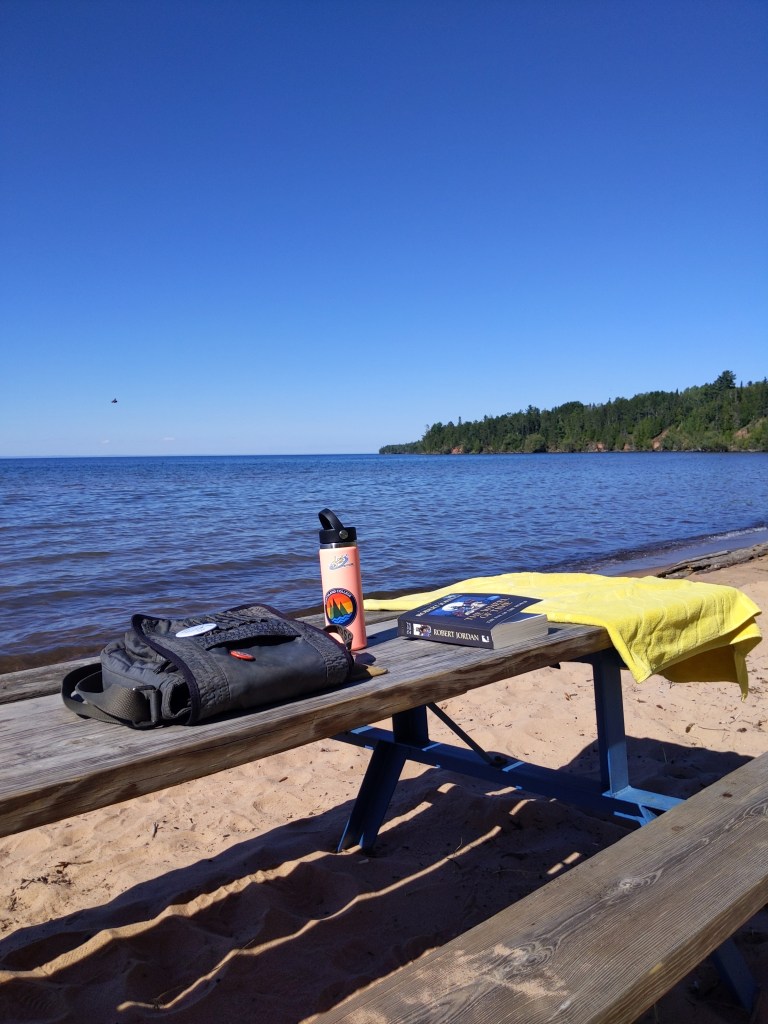
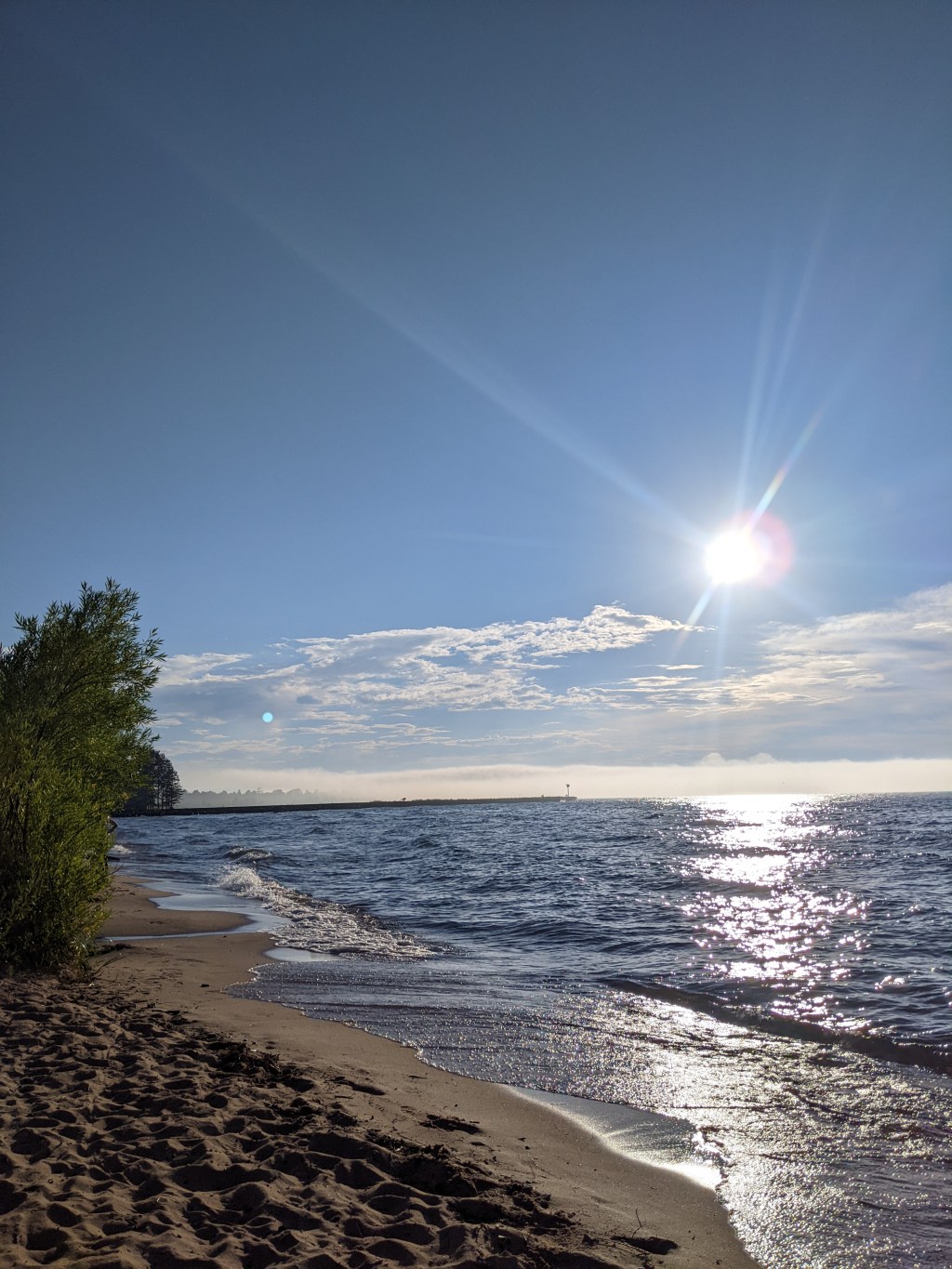
    A full year after my mentor, Joe Walewski, gave my cohort of naturalists an assignment I am finally getting a round to actually doing it. It may not end up exactly as he assigned, or even close to that. However I am doing it. Today is my 14th day sitting in the same spot at Corny Beach for at least an hour each day. I have a routine here. Take a picture, sit and watch the waves of Gitchi Gumee and note their intensity (soft, but not still today), read by book (Schools that Heal by ___________), dive into the Lake, then read again as I dry out, switching to my novel (Robert Jordan’s Wheel of Time today). I expect I’ll continue this trend for another week or so until I have to travel for a few days.

    Sitting this way, collecting snapshots in time and watching changes every day or week or month is called a sit spot. I don’t know the origin of this practice, someone can hopefully give me a history, but I hope that contemplatively inclined humans have been doing this since the dawn of consciousness. It’s the practice of the Buddha, sitting under the tree and finding enlightenment. It’s the practice of __________. Sometimes we humans are drawn to a place, and we sit there many times in our lives. It’s a practice I have always been pretty bad at until the past two weeks.

    My sit spot at Corny Beach as it is today.

    Through sit spots we can see the world shift between weather and seasons, noting who is doing what and when. Here at Corny Beach, I’ve observed how tourists react to the weather and day of the week. There’s the obvious, with there being fewer folks on a blustery wavey weekend than a bright and warm one. But there’s the not so obvious, like there being so few people here on a perfect and sunny Wednesday. Today I noticed a high number of bee flies swarming about, harmless flies which have evolved to appear like the more painful and more bountiful bee. I notice that the way the Lake moves is changing between the summer and the fall, and the ways various levels of siche effect change the structure of the beach. Maybe tomorrow I will notice the smaller plants and animals at my spot. Having a spot, and visiting it everyday, gives me joy in the knowledge of my place. Here I hold space only for me, give myself a chance to become steady, and just breathe. Even living so close to Lake Superior, sometimes in the details of life it becomes easy to forget she’s there. Making these visits part of my life everyday has made it impossible to forget that the Lake is right there, ready to support me.

    If you’re like me, a digital native born in a time of stimulation and content, it can be difficult to just sit in the same spot and observe. Don’t try. Please do have those moments of wonder in which the content washes away, but don’t force it. Don’t force your sit spot either. As you begin this practice just walk around, find yourself somewhere. Sit someday, maybe years from now, maybe tomorrow by the swamp or on that bridge you like. Then, as you find that place for the moment, take out your content whether that’s a book or a journal or crocheting, and let your conscious mind focus on that. The rest of your mind will make observations of the world around it, and give you curiosities to follow as you will. And then, the next, find yourself craving to return to the same spot, and go.

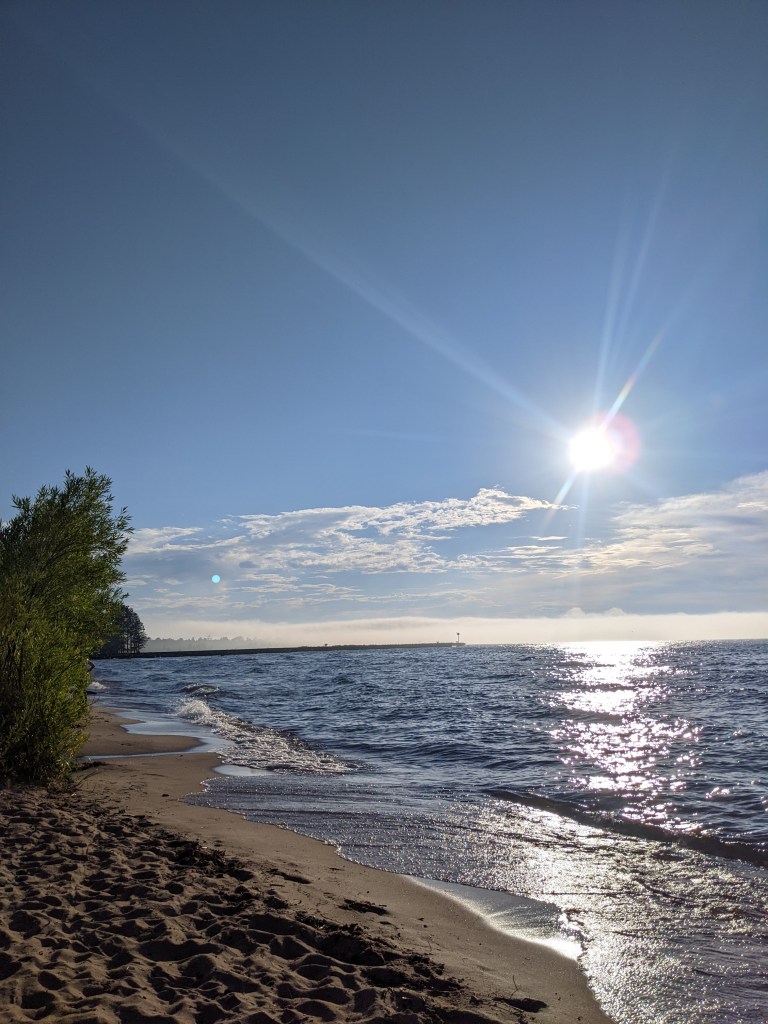
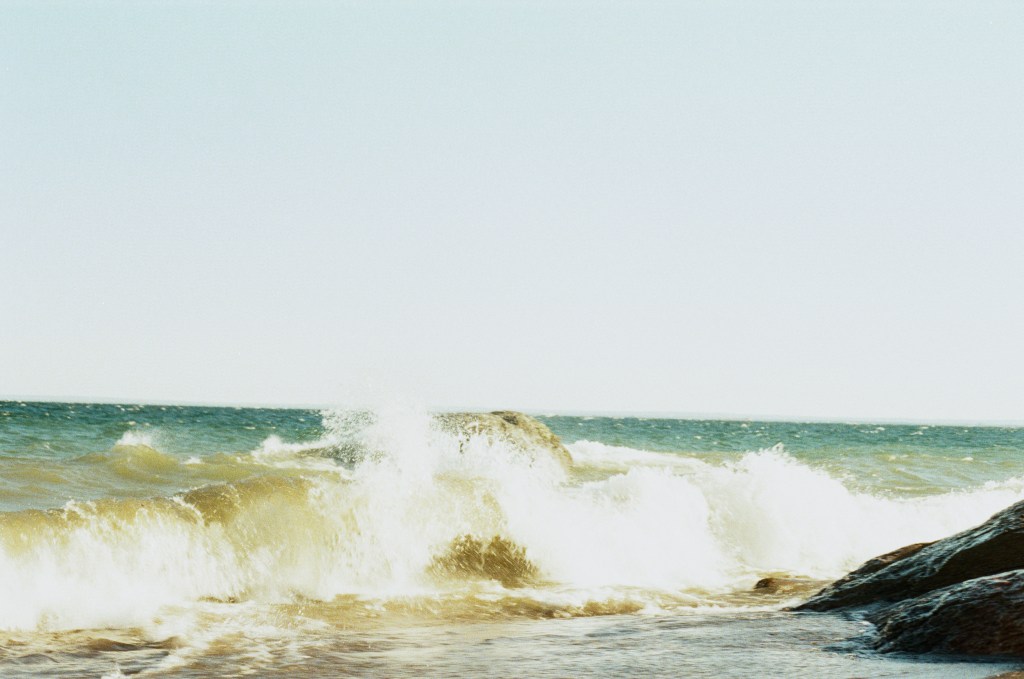
    Corny Beach Day 1: Fog over Roman’s Point and perfect sunshine just a mile away.
  • An Equal and Opposite Reaction

    An Equal and Opposite Reaction

    Today as we cleaned the trash of generations past, a friend and I discussed how we as a society will move to a more honorable, sustainable lifeway. We spent hours cleaning an eye sore of a shed, which had been left behind by the previous “owners” of land, clearing away old windows, wood carved in raccoon scat, and many tools rusted into uselessness. Around us birds sang, the wind blew, and the promise of throwing our bodies into Gitchi Gumee at the end of the day kept us going. We talked all about the future, about heat pumps and masonry stoves and floor joints. And we talked about systems.

    I fully recognize my place in the world. How gifted I’ve been, and how dependent upon the fossil fuel economy I have been. All the debris cleared out of that old old shed will go into a dumpster, and to the place we call “away”, a place which doesn’t exist. My ability to create and to learn and to grow is a symptom as well of a system which cannot exist much longer. And yet we as a society do much to prop that system up. We create pipelines and open pit mines and some of us protest against such things. After all, “a body in motion will stay in motion until acted upon by an outside force”. This is Newton’s first law of physics, and applies to human systems too. The fossil fuel economy will remain in motion until there is an outside force to stop it. Many millions of us have become that outside force, acting upon systems to stop them. Today, as I clear away the trash of one system, I wonder if we’ve forgotten some other laws.

    Every action has an equal and opposite reaction. Every protest faces equal and opposite support for projects which exploit environments and people. But what we have not seen is an equal and opposite reaction to the project itself. What would an equal and opposite reaction to an operational pipeline be? What about an open pit mine? I don’t have the answer today, but on first thought I see gardens built, grasslands replanted, housing created. For every pipeline, an equal and opposite reaction to rid ourselves of the very reasons we need them.

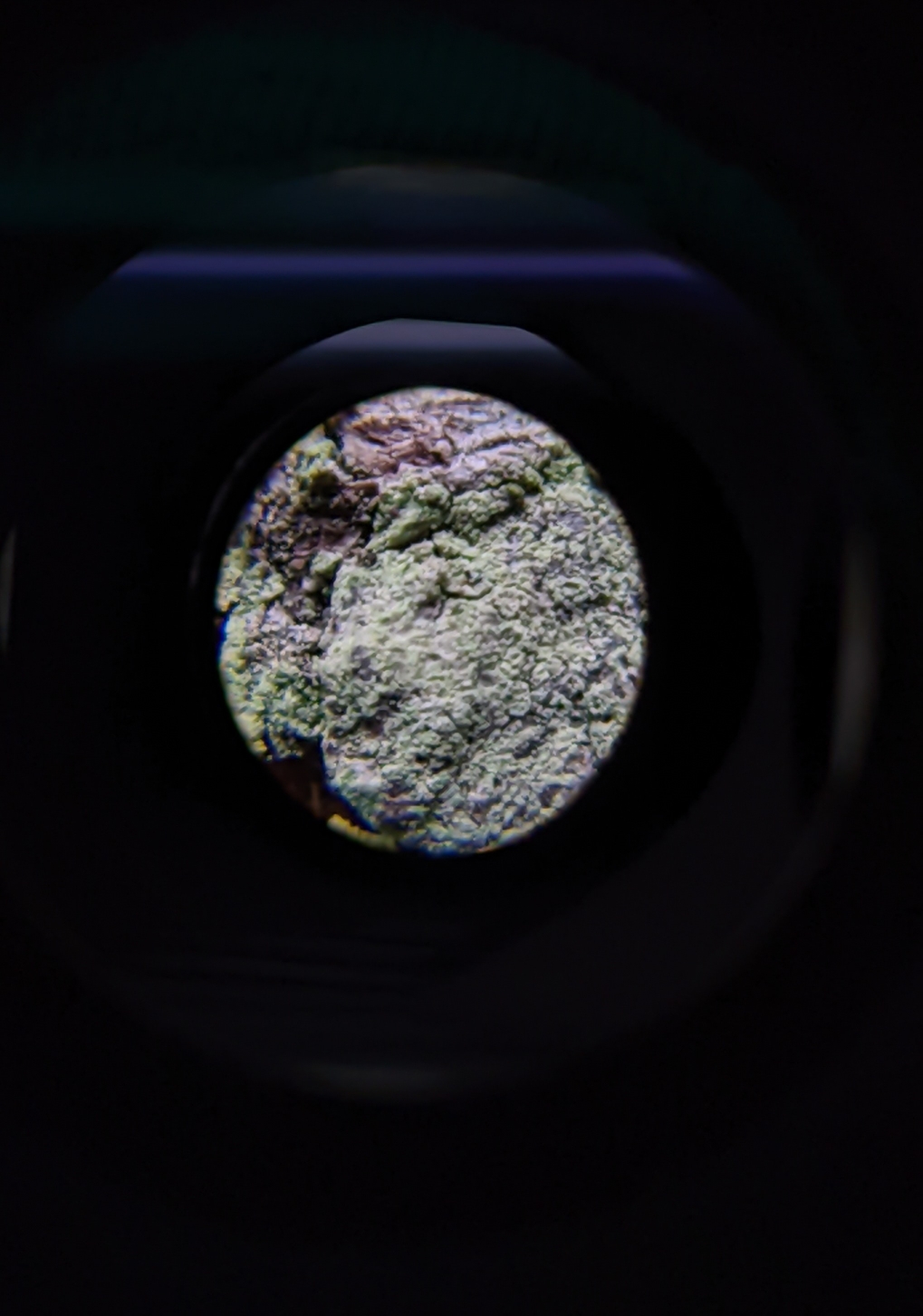
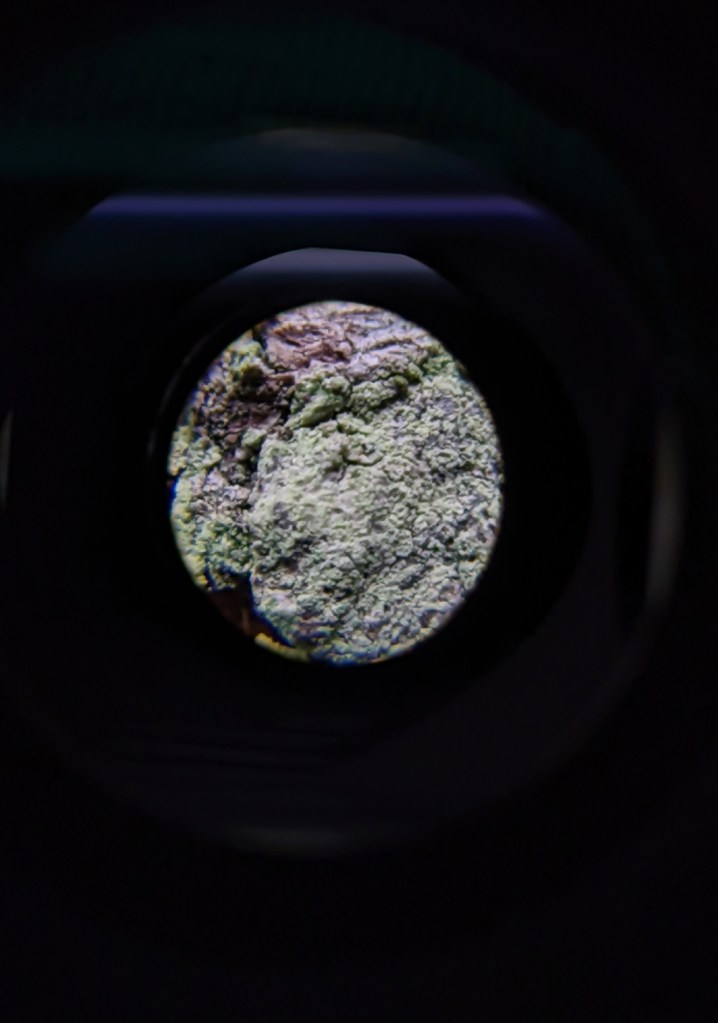
    Lichen through a microscope, an equal and opposite rection of light and mirrors?

  • Knowing by Not Knowing

    Knowing by Not Knowing

    A dear friend recently told me “I love knowing things by the way I don’t know them” as we spoke about differentiating species of lilies. I loved that phrase deeply, and I’m still trying to find all of its meaning. To know something by the ways in which you do not know it is an action. You are actively seeking what you you do not know about a thing, without seeking to answer those unknowns. I am simply wondering “what will the color of this lily be?” or “what are the parts of their flower and how do they react to the midsummer sun?”, and then I am letting the lily tell me in their own time. This attitude has some similarity to the scientific method I think.

    The curiosity of a naturalist  is bounded not by the discovery of a thing, but by the rediscovery of that thing over and over, as our perspective of the thing is changed by time. Year after year, my observation of the lilies in my yard is changed and given depth by my own sorrows and wonders, as well as the minute details of jetstream chaos, temperature differences, and forest canopy coverage. This could be considered a variation of phenology, keeping track of the year-to-year changes in nature’s timing as we track our own changes as well. To me, phenology is the realization that our own perception of nature’s changes affects those very same changes.

    The best emotional state with which to make phenological observations is with a cool and rational mind, looking for the first bloom of the marsh marigold the instant its petals unfold! But that same rational mind tells you little about your relationship to that marsh marigold, or everything that is happening around it. You sure could wait beside the wetland boardwalk all night, waiting for the petals to open before the morning light. Or you can find yourself on an adventure, and suddenly remember “ah yes, I’m looking for Marsh Marigold today, who were they again?”. By allowing ourselves to be curious about the mysteries around us, we may lose some scientific pinpoint accuracy, but we may discover so many more connections between all these little things we may have never seen before.

    Knowing a thing by the ways we do not know it means simply asking questions, not expecting an answer, and loving that thing through the mystery of what we ask. To love something or an interaction of things for its mysteries is a practice of honorable interaction with the ecological system of our Home. I know Gitchi Gummi by the way I never know what she will give me on any given day. By the way I don’t know what is around the next bend along her rocky and winding shores. Just as I purposefully forget the color of the lilies in my yard, year after year. I do this so I may hold that surprise each time it blooms, and may love again those petals, as their ornage petal unfurl to the mid-summer sun or those Superior waves as they crash about a mysterious pointe. I invite you to find yourself in boundless surprise, by allowing yourself to never know too much, and to always forget one little thing.

  • Learning in Time & Place

    Today, now, yesterday, and tomorrow, I sit at my little corner, with my salt lamp, record player, a friends lovely plants, over looking Gitchi Gumee, now bluer than the sky itself. The narrows of Wolf Lake stretch out before me, the space between mountains three.

    It was through these narrows the other day that I lead a class of seventh graders, snowshoeing to the cedar grove where it all simply stands still. They were unimpressed. However, it wasn’t for that day that I sought to impress them in this place, nor for today about a week later. Maybe tomorrow it was for? The cedars and the chaga in the birches takes their time to work their way into our hearts, but inevitably they eventually do.

    Yesterday was a very different adventure. A walkabout alone, through the melting network of ski trails along the Baptism River. I could hear the rushing waters of the Spring melt in this day before the equinox, but could see down the hill stood on. Between myself and the Baptism, a forest of spruce and fir and endless wet and sharp snow. A less interesting venture than a jaunt up the hill, towards a section of birch and the possibility of early buds. There were none, but many grouse and mystery birds abound.

    Learning in place is learning by existing and questioning. Why does this birch bend differently from all the others? Who is making that mysterious call (it was a blue jay)? Will this sunflower seed pop like corn or wild rice (nope)? In the past few years I’ve struggled with finding my own way of asking questions. But yesterday, standing at the deep snowed trail beside the hidden Baptism, I realized that I was asking these questions all the time, but wasn’t taking the time to notice them. As I welcome the Spring equinox today, I create this intention for the next three months; To take the time to notice the questions I’ve been asking myself all along.

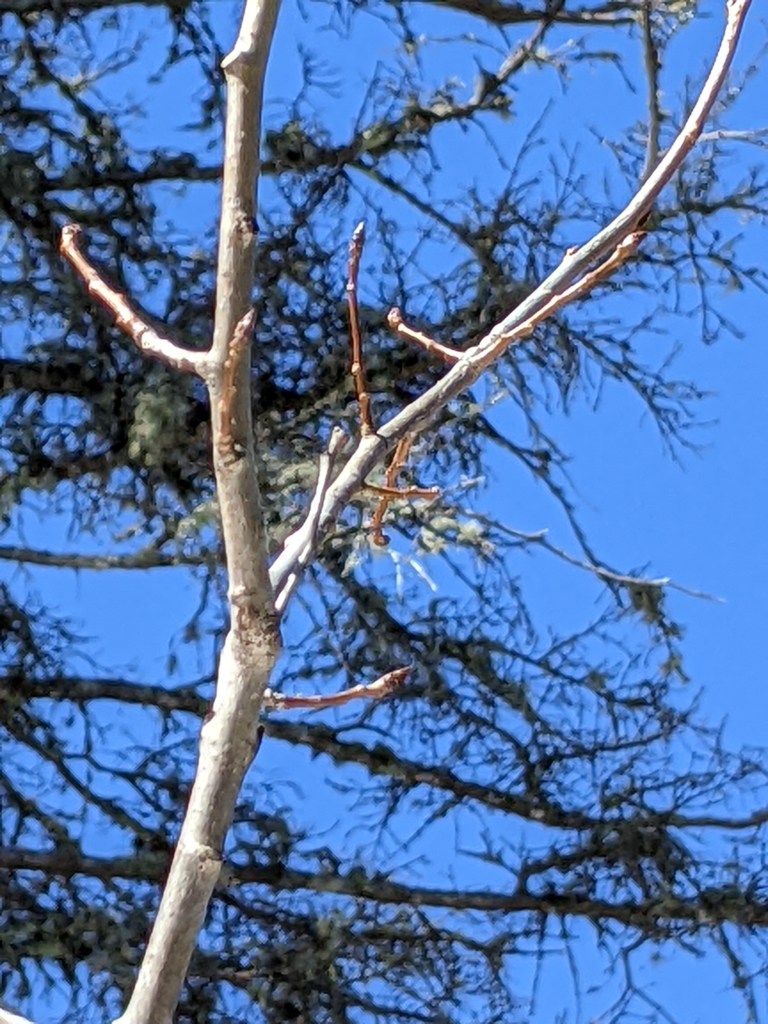
    Quacking Aspen buds how do you prepare for the warmth of the sun? Can I do the same?.
  • Imbloc, Candlemas, Approaches

    A dear friend recently told me “I never understood why you loved candles so much, until I took one with me for a late night shower. Then I knew. Its the softness of the light, and the way it interacts with the softness of the world.” Or something like that.

    To be honest, the art of letting a candle burn, and giving into that softness, has at times been lost to me in my craft, especially in these COVID days. The art of making a candle became a routine, a piece of something I do rather than a sacred piece of myself. Momentum sometimes pushes our actions rather than true dedication and mindfulness.

    I live my life by momentum. The seeking of Love, the making of a candle, selling my craft and my work. All momentums, which swirl together without mindfulness to create a life. I suspect many people I share life with feel this same momentum. This is especially true in the depths of the winter nights, when we’re just keeping ourselves going until the spring thaw, and the appreciation of living that comes with it.

    Holidays and reminders break up this momentum, force us to pause and find our mind again. So why not add more holidays?! I dont know if you know Imbloc, a Celtic holiday, the mid-point between the solstice and the equinox which occurs on Feburary 1st. It is candlemas, it is the return of that soft light. St. Valentine’s day celebrations of Love often replace it in America, but why not celebrate both! As Gaby Herstik describes-

    Imbloc is the day when we are allowed to thaw our pains with medicine from the Sun, and grow what we want as we approach the spring equinox and the start of a new cycle. – Inner Witch, pg. 62

    There are some rituals she describes in Inner Witch and in her Imbloc ritual guide which help us find our way from momentum to mindfulness. Go check those out if your interested. https://www.gabrielaherstik.com/shop I myself can offer tools for some of these rituals, beeswax candles which hold in them different elements and facets of life, which can be used in Herstik’s rituals or your own. Contact me if you would like some.

    My intention this Imbloc is not let momentum rule me, and step into mindful action whenever I am able. Sometimes I wont be, and that’s fine. Candles are tool to help me realize this. To be mindful of a flame is to be mindful of the danger of life, but also its softness. Go find that softness as the thaw approaches.