Tag: Essay

  • What is A Naturalist?

    What is A Naturalist?

    Recently while sitting around in conversation after a program, my co-worker turned to us and said something along the lines of “We’re all naturalists here, I just assumed we all had biology degrees.” It was a beautiful autumn day, and myself and five other naturalists were gasping for air after hours of field trip programming for first graders. We had each spent the morning walking through golden lit forests, building shelters, and finding bats, all while answering the questions of curious minds of of running children. I forget the way we ended up questioning the nature of a naturalist, but am deeply familiar with my co-workers sentiment.

    It is something I have encountered numerous times, most frequently in urban areas. It is a sentiment I encountered while talking with a principal of an elementary school in St. Paul, who when I told him I was pursuing a degree in environmental education asked “Ah, so you want to be a science teacher”. Or, there was the time that I was offered a job at a local charter school. When I asked what position I would be taking on, the director of the school answered, “well science, duh!”. There is an assumption present in these statements that a naturalist or environmental educator is in essence a science teacher in an outdoor setting. Some of you reading may share that philosophy. And I understand it. As I write this, I feel entirely silly myself for having taken a very different path into the profession of being a naturalist. A Naturalist IS a science educator, but is also so much more. A Naturalist thinks in history, biology, sociology, art, and all sorts of other fields in order to interlink a community with its ecosystem. So what exactly is a Naturalist?

    For now, I think I am satisfied just asking the question. Throwing it out there into the cyber void. Maybe tomorrow I’ll try to describe one thing a naturalist is. Then maybe a couple days later I will describe another thing a naturalist is. For now though, the autumn has ended, and it is time for me to take a walk to Lake of the Isles in new fallen snow, greeting the three cardinals in my bird feeder on the way.

  • Moving Firewood and the Act of Social Justice

    Moving Firewood and the Act of Social Justice

    One late April day, I found myself moving firewood between two sheds in northern Minnesota. It was a point in the spring when the sun should be just starting to shine warmly, or the rain should be falling upon flowers just about to blossom. I was caught in a mid-day blizzard, the immediate surroundings completely wiped away by the winds and snow. I knew that around me were miles of conifer trees, wetlands, and small lakes that had been scratched from the Earth 10,000 years ago by glacial retreat. From the rocky glacial cliff the sheds sat upon, I could barely see Pickett’s Lake below. It was in this setting that I, a young volunteer staying at a familiar homestead, found myself moving wood that had been drying for two years one step closer to its final destination, the cabin woodstove. Next winter it would be the main heat source for the aged and wise arctic explorer I was volunteering for.

                   I expected nothing from this action for myself, except to help out a man I consider a mentor and a hero. He was away somewhere, speaking at a university or on a dog sled expedition into the Canadian Barrens, taking data along the way that would help scientists understand how the world is shifting and changing. I was alone here, familiarizing myself with the etches and bug paths laid into old beams of wood, protecting the potential of future heat from the elements I could not escape. Moving firewood from one shed to the next. Today, that would be my contribution. That evening, I would go to another tiny little cabin where I was staying, and burn some firewood that someone had moved for me, and eat something that someone had grown or hunted, and then kept cool in the root cellar just across the way. The root cellar where the summer before I had taken breaks to drink juice, escaping the hot summer sun in coolness which had been harvested that February from the lake, in the form of blocks of ice, cut and dragged to this place in celebration for the hot months to come. This was a place of cycles, and harvesting energy from the present to save it for the near future.

                   Our society does this work all the time, except on a much greater time scale. We harvest energy from millions or even billions of years ago in the form of fossil fuels or rare earth minerals. These are the remains of ancient algae or even more ancient stars, turned into energy for the present at our leisure. This transformation of ancient energy allows me to move firewood from shed to shed for my mentor in the first place, for it was that ancient energy pumped into my car which enabled me to travel the 200 miles to get here in only four hours. I drove here from my college dorm to spend a week seeking a life I so desperately wanted, one of existing simply in the day-to-day tasks of life off the grid.

    The path to a socially, economically, and ecologically just culture lies in simplifying life and its expectations. We expect so much in our desires, as we seek a world in which every individual can have a smartphone, a two-story house all to ourselves, and can travel the world as much as they’d like. This approach to life, the consumerist philosophy of self-enrichment, is starving our society, and the ecologies which surround us.

                   The American Dream in its modern, neoliberal form depends on an ever increasing “quality of life”. More economic activity and more money exchanging hands becomes essential at every level, and an enterprise which is not constant increasing its productivity is bound to closure. In modern terms this means; increasing automation and the ease of everyday tasks, making everything “convenient”, and consuming more and more material goods. A smartphone increases ease of communication, a personal car increases ease and independence of transportation. This ease denotes a perceived increase in the complexity of technology and actions. This ever-increasing complexity has become the standard upon which our quality-of-life rests. The American populace embodies ever more complex desires and standards, with the assumption that increase in complexity is linear and perpetual. Yet as every innovation adds a thread to our web of complexity, the energy which is returned on energy invested decreases, as it takes more energy investment to yield a lower increase in complexity. Like a spider’s web which is weighed down by too many threads, our own innovations are becoming a weight the world cannot bear.

                   At the homestead beside Pickett’s Lake, I had to use my technology carefully in order to balance my energy consumption and return. I drove the truck sparingly to haul lumber from the warehouse to the mill, for the nearest gas station was an hour away in town, and I didn’t want to be the cause of a two-hour diversion just for gas and some snacks. I spent a couple of those spring days, after the storm had passed, scanning old beams of wood with a metal detector, searching for and removing any nails so the beams could be milled and reused, rather than having to find and cut another tree which had been storing energy for over one hundred years. My tasks at the homestead were all focused on using some energy, in this case my physical effort, in order to conserve the total energy of the ecosystem around me, an ecosystem which included the human elements of the homestead. At the end of the day I would climb to the top of the of what we interns and volunteers called ‘The Castle’, rising at the top of a small hill five stories above the coniferous expanse of the Northwoods. This was the only place on the homestead you could get a phone signal. The solar panels below had given my phone a couple hours charge, and I used it to listen to MPR Classical up here at the tops of the trees. I would write one text message to my mother, then use the remaining daylight to read my book. Here at the homestead, I had to use my energy to maximize my joy.

                   Energy returned on energy invested (EROEI) may be understood as a ratio between the amount of energy expended to create a given good or service and the amount of energy that good or service returns to the user. Take fossil fuel extraction- as a resource becomes rarer, it takes more energy to extract a fuel source which yields the same amount of energy as more easily accessible sources, thus diminishing EROEI. More energy is expended in order to extract the same amount of potential energy. In our case ‘energy’ may be understood as work derived from resources, or as the joy or pleasure a good or service brings to our lives. In a modern context, it is taking ever so slightly more energy to extract the resources needed to create a smartphone each year, due to increase in the rarity of those resources. At the same time each new smartphone model produces a smaller amount of new energy than the previous new model did. The 10th generation of a smartphone does not change the way you interact with the world the same way the very first model did. In this way each innovation returns a smaller amount of new, vibrant energy than the previous innovation, as the ratio of EROEI steadily levels off.  The curve of complexity is not linear, but rather is an inverse exponential curve which may increase quickly in the beginning of an innovation, but which soon levels off until a new, more energy intense innovation increases the curve yet again.  

                   As stated earlier, the current iteration of the American Dream depends upon a steadily increasing level of complexity, which depends upon a consistent or increasing EROEI. It is increasingly acknowledged that this materialistic narrative is unsustainable and corrupt, and that some form of transition is required. Progressive movements ranging from Extinction Rebellion to Occupy to Black Lives Matter have sought to reclaim and reframe this bootstrap complexity narrative, creating a diversity of visions of future ‘American Dreams’. The long-term goal of these movements was to have their version of the future American narrative to be accepted by the general public.

    Modern economically focused progressive movements have tended to focus on the idea of redistribution. Redistribution would use resources obtained from the upper classes in order to provide a more equitable economic situation for everyone. Over time this approach may level economic differences between classes. The goal of these movements has consistently been to raise the quality of life of the masses to equal that of the contemporary vision of the American dream, and thus increasing the standard level of complexity to be expected for a normal member of society. In this vision, the base assumption might be that, after basic needs are met, every member of society should have access to the latest personal technology. A smart fridge in every home.

    While this an admirable goal, the Earth’s ecological capacity does not allow for each human to possess each latest model. We have long surpassed point in which the Earth cannot support raising the global quality of life to American standards. There are simply not enough accessible rare earth metals for each person to have the latest smartphone technology, or enough fossil fuels for each person to have a personal car, and AI stands ready to make this problem worse with the need for immense processing power. The carrying capacity of the Earth already exists in a state of overshoot, as we see daily examples all around us of dwindling resources and long-lasting pollution. In this overshoot state, civilization is kept in a relatively stable state by massive energy investment. The tar sands oil fields are a prime example of the energy required to stabilize our civilization. Each gallon of tar sands crude oil takes a higher energy investment to extract and process than previous oil sources, while the energy return remains approximately the same. Thus, more energy is expended to yield the same amount of energy return. A higher quality of life characterized by unsustainable energy input.

                However, information technology and personal transportation are great enablers of social movements. They enable such social ties across regions that previous technologies couldn’t maintain, and make it much harder for the state to repress social movements it deems subversive or chaotic. The question before us is more complex than simply abandoning or embracing complexity, but instead evolves into a question of how to live within ecological means while enabling the continuation of social movements without repression. The answer, as far as there is one answer, lies in the simplification of lifeways, in order to maintain the continuation of technology which truly adds to the human experience.

               The ideal of simplicity has long been woven into the American narrative. Narratives of Walden Pond and homestead culture, while deeply entwined with narratives of colonialism and American Empire, can a base point of understanding, commonly known among the average American mind. Most Americans can create a picture in their minds of this ideal, the cabin in the woods, the simplicity of a day spent tending the beanfield overlooking a lake. If movements are willing to acknowledge the flaws of the pioneer and back to the land narratives while learning from their lifeways, these narratives can serve as a basepoint from which a common understanding can be built. Just as American Empire has the stories of the bootstrap narrative and exceptionalism, so to must the movements of The Great Turning develop a relatable, diverse narrative to espouse a better life.

                   During my time at the homestead, I would spent my days weeding the raspberry patch, pulling a third of an acre of horsetail away from newly planted raspberries. This probably took more energy from me than would ever be returned in the form of raspberries, but this act fed my soul well enough. I would then climb into a canoe and paddle the lake for a time, before hopping into the Lake, enjoying the sauna, and then spending time in whichever little cabin I was staying in that week. This routine became an idealized story I would tell myself over and over again for years, as the kind of story I most wished to live.

                   I, like some peers of our generation, have always dreamed of the ideal of the cabin in the woods, the simple, regenerative life. I’ve dreamed of the life that my mentor and many others like him lived in the 20th century. Twenty acres, and a cabin in the woods built by hand. A place to create a home, and an ecology to regenerate. Yet in looking to foster that life for myself, I found a certain irresponsibility in leaving my community behind, and an irresponsibility of taking twenty acres of land for myself. My peers were right, when they asked how I could leave behind the human spaces of the world when people like us were so desperately needed to change society. We cannot step back from our human community, yet we must acknowledge the complex energy imbalance of neoliberal society cannot be maintained. The energy investment is simply too high to maintain a similar level of energy return. Thus, simplicity and sharing of space and resources becomes the crux of our narrative. The action of community is the essence of simple living.

                   A community oriented towards simplicity instead of individualistic complexity requires strong institutions in order to meet its needs. It needs community members to be conscious of the resources they possess, and which their neighbor is in need of. It needs strong systems to share resources amongst its people, and commons spaces to create mutual bonds. And these institutions already exist, in the age old example of the library. The sharing of knowledge through collective ownership of books has for millennia been an indispensable part of human community. This model of collective ownership of knowledge can and must be expanded to include skills, tools, information technology, transportation, and any other part of our lives possible.

                   This collective sharing of resources can be seen today in the proliferation of Maker Spaces. These are collective organizations in which members share tools and space in exchange for a monthly fee or a few hours labor. For a cost which may be physical or monetary, one has access to a workshop they could not otherwise afford. Here a woodworker or a metal artist shares their resources for the benefit of the whole community, and in turn receives a space in which to do their work, in community among others with similar skills and different backgrounds.

    As a model, Maker Spaces point towards community-oriented approach, in which resource intensive tools are shared, instead of individualistically consumed. As rare earth metals become more energy intensive to dig up, this model can be used to continue our access to social media and information in a collective manner rather than as an individualistic pursuit. If we act early enough, our choice is not between continued access to technology or ecological health, but rather in how we collectively access technology. If we collectively own smartphones, rather than individually, we can continue our relationship with technology while cultivating a relationship with ecology and ourselves.   

                           Moving firewood or sharing tools and workspaces is part of a practice in simplicity, cultivating our quality of life and a deeper understanding of ourselves in the context of community. Through sharing energy intensive processes that define American lifeways, such as tools, transportation, information, we deepen our own human experience. We share tasks with the clear intention of limiting the complexity that defines the consumerism our lives. Simplicity is the point of greatest energy return which can be sustained over generations and matches the quality of life we desire. In order to embrace this simplicity, we must tell a new story, a different story, in order to fit our lives in a new, less fragile mold.

                   There are many steps we may take to foster simplicity in our lives. In the most concrete sense, we must create the spaces where simplicity thrives. We can build tiny houses, to live within a smaller footprint. We can create maker spaces, and add technology like smart phones and tablets to libraries, to render owning our own individual technological tools less necessary, or even cumbersome. Collective ownership of resource heavy tools, anything from smartphones to table saws, will enhance the social capital of our community, and help make these tools accessible to a greater diversity of people. These spaces lower our footprint on the planet, and enhance our connection with one another.  

    More deeply, we must participate in the movement of unlearning and remolding our stories, and our expectations of ourselves. These stories already exist, and we must simply open our ears to listen. The narratives of the Great Turning, permaculture, and social justice are already stories which are told in our culture. By expounding upon and living as best as we can within these stories, they may begin to become the expectations of our society, replacing the consumeristic dream of today. Moving firewood from shed to shed has become part of my story of social justice, as I strive to do good as an action rather than as a concept. We must actively participate in whatever a simpler world means to each of us individually. Each of us can be a model, showing to our peers that simplicity, without giving up the advances of our society, is possible. Showing that by living simply, we may finally be able to live in the socially just world we have strived so long for.
  • Thank God I am Not a Space Whale

    Thank God I am Not a Space Whale

    “Thank God I’m not a space whale,” I think to myself with my ear crushed against the yoga studio floor, “for if I were a space whale, I would be doomed to forever wander in wonder in the vastness, the grand vacuum. And I wouldn’t be able to experience this…”. The class below is playing one of my favorite songs, and its reverberations pulse through the floor in a steady rhythm, in opposition to the pristine calm of the Yin class above. My body, folded in tension and discomfort, exists in contrast with my mind, stretched out in perfect stillness. In the contrast I am in revery. My lover is on the next mat over from mine. Our hands nearly touch on the rough wooden floor. I am not a space whale. I am here. I am human. I am experience and thought held together by blood and flesh.

     As my body folds over itself so too does my mind, finding the parallax between the energy below and the calm within. Every muscle and thought folding into each other, held together by experience and sensation. Thus, I think to myself in gratitude, thanking whatever higher power there may be, whether God, Karma, or lover, that I am me, existing in this moment on the yoga studio floor, folded into my imagination.

    Space is vast. Potentially infinite, though more likely simply big. We can observe a 93 billion light year bubble, growing every day on some upon unknown substrate, teeming with vibrating strings of energy. Their pulse is probability and fills reality with more versions of itself than can possibly be known. Yet on the scale of sensation, of that which we may perceive and experience, space is deeply empty. Something around 96 percent of the universe is made up of stuff that cannot be seen, felt, or heard. I think of dark energy and dark matter as Karma without experience. Energy without spark. Lack of suffering. Lack of anything. Perfection. The rest of the universe isn’t so diverse either. Seven types of stars and seventeen types of planets, composed of and separated by one hundred some types of matter, scattered.in small bubbles hung together by gravity, the vastness of perfection in between. All incredibly breathtaking, all incredibly boring. So little variety in the inky darkness of dust and neutrinos.

    Thank God I am not a space whale, I think as I am folded over on the yoga studio floor. If I were I would be cursed to wander forever the void of the universe. Imagine that. Floating between the stars as though they were a sea, following the gravitational flow of galaxies from system to system, taking in everything. Every gas giant, every chunk of rock burning or freezing or just right and bursting with blue. Forever dreaming of observing the death of a star. Would the pale blue dot of the Earth be but a mote of dust in my wanderings, of the same amount of interest as a roadside attraction? Or would it be repulsive to my biology, an object of fear and dread, so adapted to the inky black as I would be?

    On the yoga studio floor, I am for a moment that space whale, staring down at a chaotic planet of joy and pain. My keen eyes see the Whittier neighborhood, photons reflected off speeding cars, record stores, and folks walking between destinations. There is no medium for sound or smell in my home amongst the vacuum, so I can only observe the people in child’s pose through the yoga studio glass. Just for a moment I am that wanderer, bound to bearing witness to the birth and death of stars and planets. Always witness to experience, but never the one who experiences. A creature of wonder in our imaginations, sentenced forever to wander the void of eternity.

    Here I am. My ear pressed against the wood floor, the sun weeping photons into my eyes. I am a being of Earth, experiencing life regardless of will. Doomed to experience with little time to observe. I am brought back to myself. The song changes. The vibrations through to floor slow, and my teacher calls me to a new posture. My body rises without the intervention of my mind, instinct pushing me forward. I experience every speck of light falling upon my body reflecting know the colors I portray myself to be. I am called back to experiencing my present moment, instead of merely observing it. feeling the contraction of each muscle on my way to gratitude. Thank God I am not a space whale, I think to myself. Later that night I am crying in my bed, remembering I am cursed and blessed to experience, and to someday end. My lover holds me. In my dreams, I wander from star to aching star.

  • Sit Spots

    Sit Spots

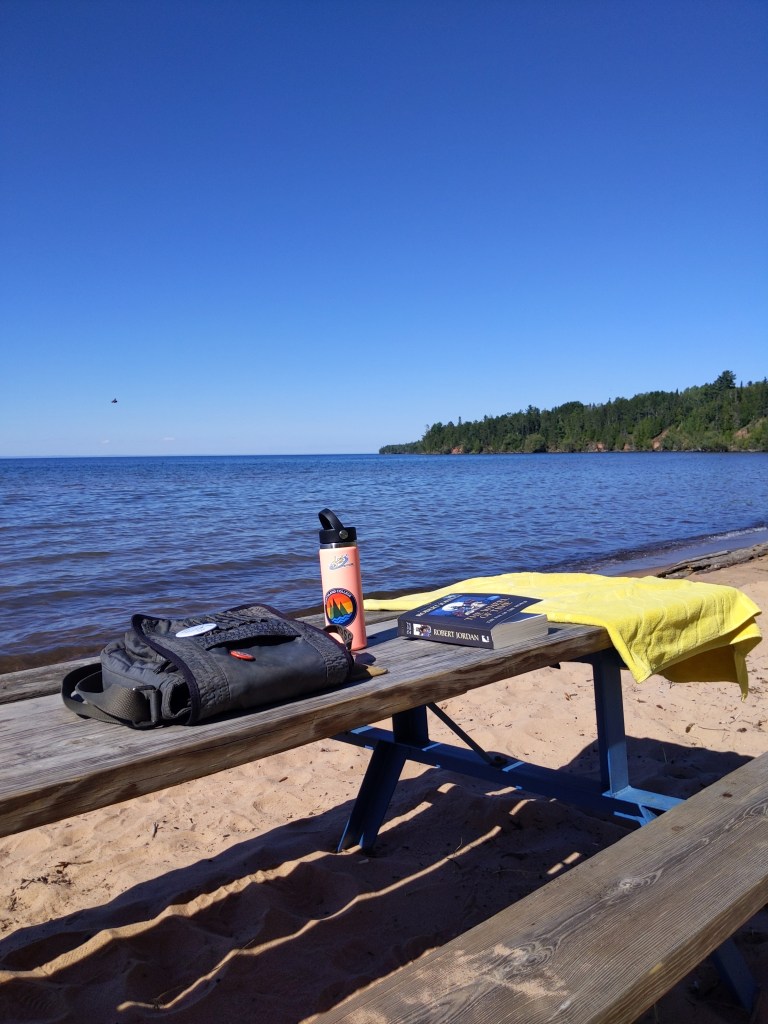
    A full year after my mentor, Joe Walewski, gave my cohort of naturalists an assignment I am finally getting a round to actually doing it. It may not end up exactly as he assigned, or even close to that. However I am doing it. Today is my 14th day sitting in the same spot at Corny Beach for at least an hour each day. I have a routine here. Take a picture, sit and watch the waves of Gitchi Gumee and note their intensity (soft, but not still today), read by book (Schools that Heal by ___________), dive into the Lake, then read again as I dry out, switching to my novel (Robert Jordan’s Wheel of Time today). I expect I’ll continue this trend for another week or so until I have to travel for a few days.

    Sitting this way, collecting snapshots in time and watching changes every day or week or month is called a sit spot. I don’t know the origin of this practice, someone can hopefully give me a history, but I hope that contemplatively inclined humans have been doing this since the dawn of consciousness. It’s the practice of the Buddha, sitting under the tree and finding enlightenment. It’s the practice of __________. Sometimes we humans are drawn to a place, and we sit there many times in our lives. It’s a practice I have always been pretty bad at until the past two weeks.

    My sit spot at Corny Beach as it is today.

    Through sit spots we can see the world shift between weather and seasons, noting who is doing what and when. Here at Corny Beach, I’ve observed how tourists react to the weather and day of the week. There’s the obvious, with there being fewer folks on a blustery wavey weekend than a bright and warm one. But there’s the not so obvious, like there being so few people here on a perfect and sunny Wednesday. Today I noticed a high number of bee flies swarming about, harmless flies which have evolved to appear like the more painful and more bountiful bee. I notice that the way the Lake moves is changing between the summer and the fall, and the ways various levels of siche effect change the structure of the beach. Maybe tomorrow I will notice the smaller plants and animals at my spot. Having a spot, and visiting it everyday, gives me joy in the knowledge of my place. Here I hold space only for me, give myself a chance to become steady, and just breathe. Even living so close to Lake Superior, sometimes in the details of life it becomes easy to forget she’s there. Making these visits part of my life everyday has made it impossible to forget that the Lake is right there, ready to support me.

    If you’re like me, a digital native born in a time of stimulation and content, it can be difficult to just sit in the same spot and observe. Don’t try. Please do have those moments of wonder in which the content washes away, but don’t force it. Don’t force your sit spot either. As you begin this practice just walk around, find yourself somewhere. Sit someday, maybe years from now, maybe tomorrow by the swamp or on that bridge you like. Then, as you find that place for the moment, take out your content whether that’s a book or a journal or crocheting, and let your conscious mind focus on that. The rest of your mind will make observations of the world around it, and give you curiosities to follow as you will. And then, the next, find yourself craving to return to the same spot, and go.

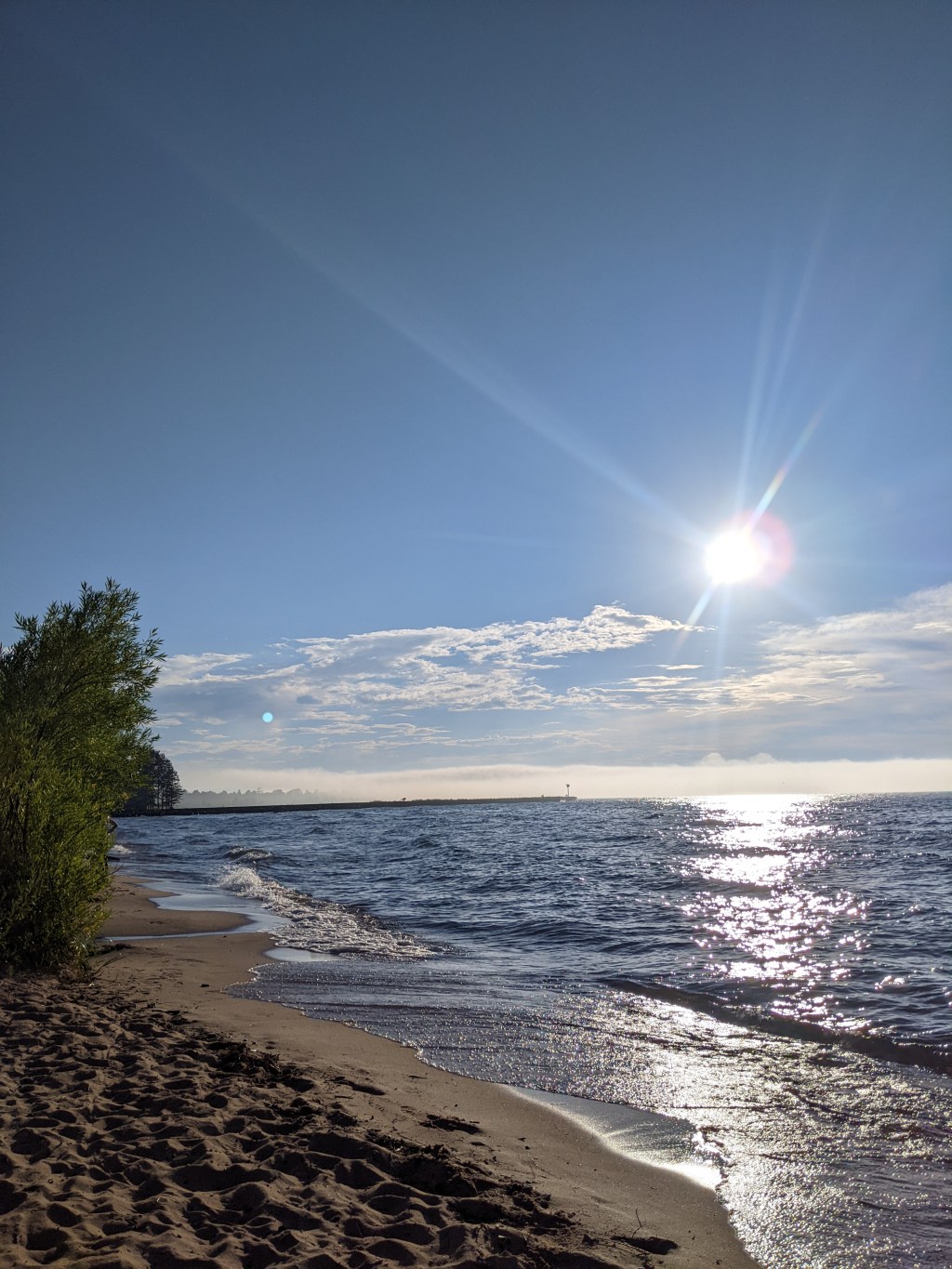
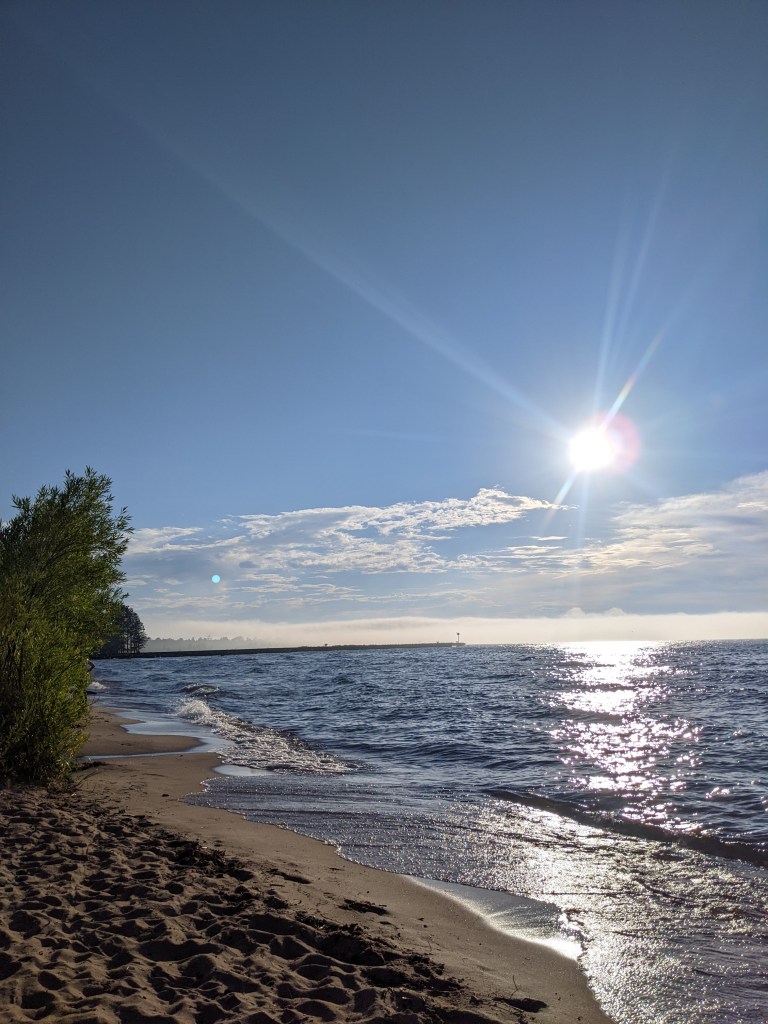
    Corny Beach Day 1: Fog over Roman’s Point and perfect sunshine just a mile away.
  • An Equal and Opposite Reaction

    An Equal and Opposite Reaction

    Today as we cleaned the trash of generations past, a friend and I discussed how we as a society will move to a more honorable, sustainable lifeway. We spent hours cleaning an eye sore of a shed, which had been left behind by the previous “owners” of land, clearing away old windows, wood carved in raccoon scat, and many tools rusted into uselessness. Around us birds sang, the wind blew, and the promise of throwing our bodies into Gitchi Gumee at the end of the day kept us going. We talked all about the future, about heat pumps and masonry stoves and floor joints. And we talked about systems.

    I fully recognize my place in the world. How gifted I’ve been, and how dependent upon the fossil fuel economy I have been. All the debris cleared out of that old old shed will go into a dumpster, and to the place we call “away”, a place which doesn’t exist. My ability to create and to learn and to grow is a symptom as well of a system which cannot exist much longer. And yet we as a society do much to prop that system up. We create pipelines and open pit mines and some of us protest against such things. After all, “a body in motion will stay in motion until acted upon by an outside force”. This is Newton’s first law of physics, and applies to human systems too. The fossil fuel economy will remain in motion until there is an outside force to stop it. Many millions of us have become that outside force, acting upon systems to stop them. Today, as I clear away the trash of one system, I wonder if we’ve forgotten some other laws.

    Every action has an equal and opposite reaction. Every protest faces equal and opposite support for projects which exploit environments and people. But what we have not seen is an equal and opposite reaction to the project itself. What would an equal and opposite reaction to an operational pipeline be? What about an open pit mine? I don’t have the answer today, but on first thought I see gardens built, grasslands replanted, housing created. For every pipeline, an equal and opposite reaction to rid ourselves of the very reasons we need them.

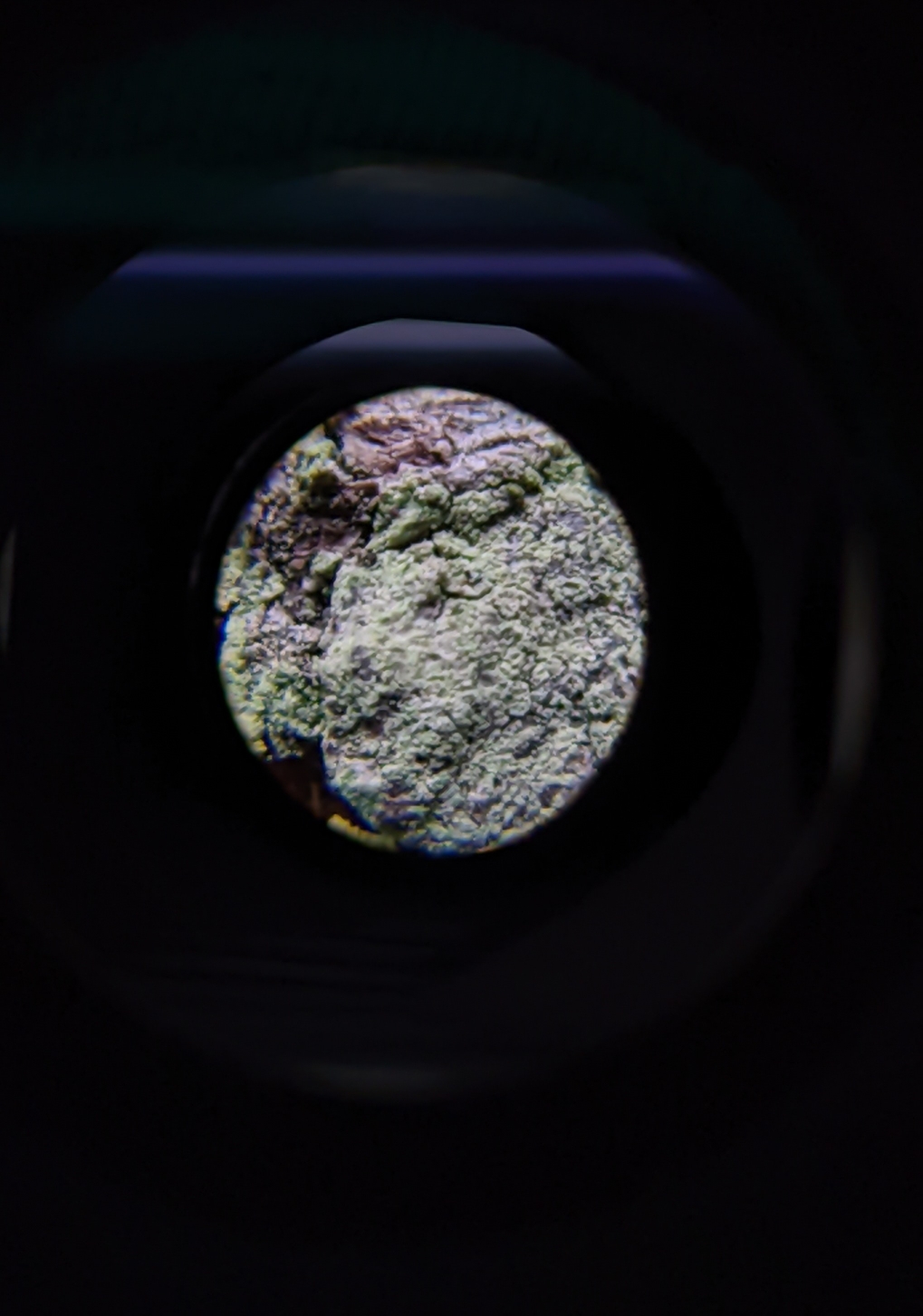
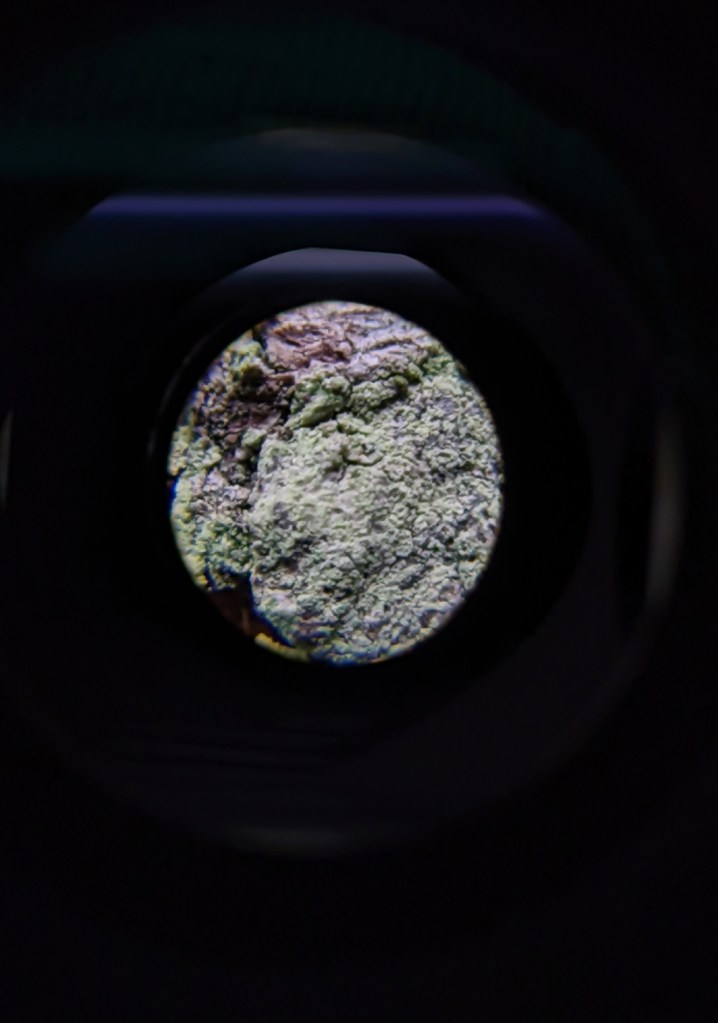
    Lichen through a microscope, an equal and opposite rection of light and mirrors?

  • Knowing by Not Knowing

    Knowing by Not Knowing

    A dear friend recently told me “I love knowing things by the way I don’t know them” as we spoke about differentiating species of lilies. I loved that phrase deeply, and I’m still trying to find all of its meaning. To know something by the ways in which you do not know it is an action. You are actively seeking what you you do not know about a thing, without seeking to answer those unknowns. I am simply wondering “what will the color of this lily be?” or “what are the parts of their flower and how do they react to the midsummer sun?”, and then I am letting the lily tell me in their own time. This attitude has some similarity to the scientific method I think.

    The curiosity of a naturalist  is bounded not by the discovery of a thing, but by the rediscovery of that thing over and over, as our perspective of the thing is changed by time. Year after year, my observation of the lilies in my yard is changed and given depth by my own sorrows and wonders, as well as the minute details of jetstream chaos, temperature differences, and forest canopy coverage. This could be considered a variation of phenology, keeping track of the year-to-year changes in nature’s timing as we track our own changes as well. To me, phenology is the realization that our own perception of nature’s changes affects those very same changes.

    The best emotional state with which to make phenological observations is with a cool and rational mind, looking for the first bloom of the marsh marigold the instant its petals unfold! But that same rational mind tells you little about your relationship to that marsh marigold, or everything that is happening around it. You sure could wait beside the wetland boardwalk all night, waiting for the petals to open before the morning light. Or you can find yourself on an adventure, and suddenly remember “ah yes, I’m looking for Marsh Marigold today, who were they again?”. By allowing ourselves to be curious about the mysteries around us, we may lose some scientific pinpoint accuracy, but we may discover so many more connections between all these little things we may have never seen before.

    Knowing a thing by the ways we do not know it means simply asking questions, not expecting an answer, and loving that thing through the mystery of what we ask. To love something or an interaction of things for its mysteries is a practice of honorable interaction with the ecological system of our Home. I know Gitchi Gummi by the way I never know what she will give me on any given day. By the way I don’t know what is around the next bend along her rocky and winding shores. Just as I purposefully forget the color of the lilies in my yard, year after year. I do this so I may hold that surprise each time it blooms, and may love again those petals, as their ornage petal unfurl to the mid-summer sun or those Superior waves as they crash about a mysterious pointe. I invite you to find yourself in boundless surprise, by allowing yourself to never know too much, and to always forget one little thing.

  • A Naturalists Habits

    A Naturalists Habits

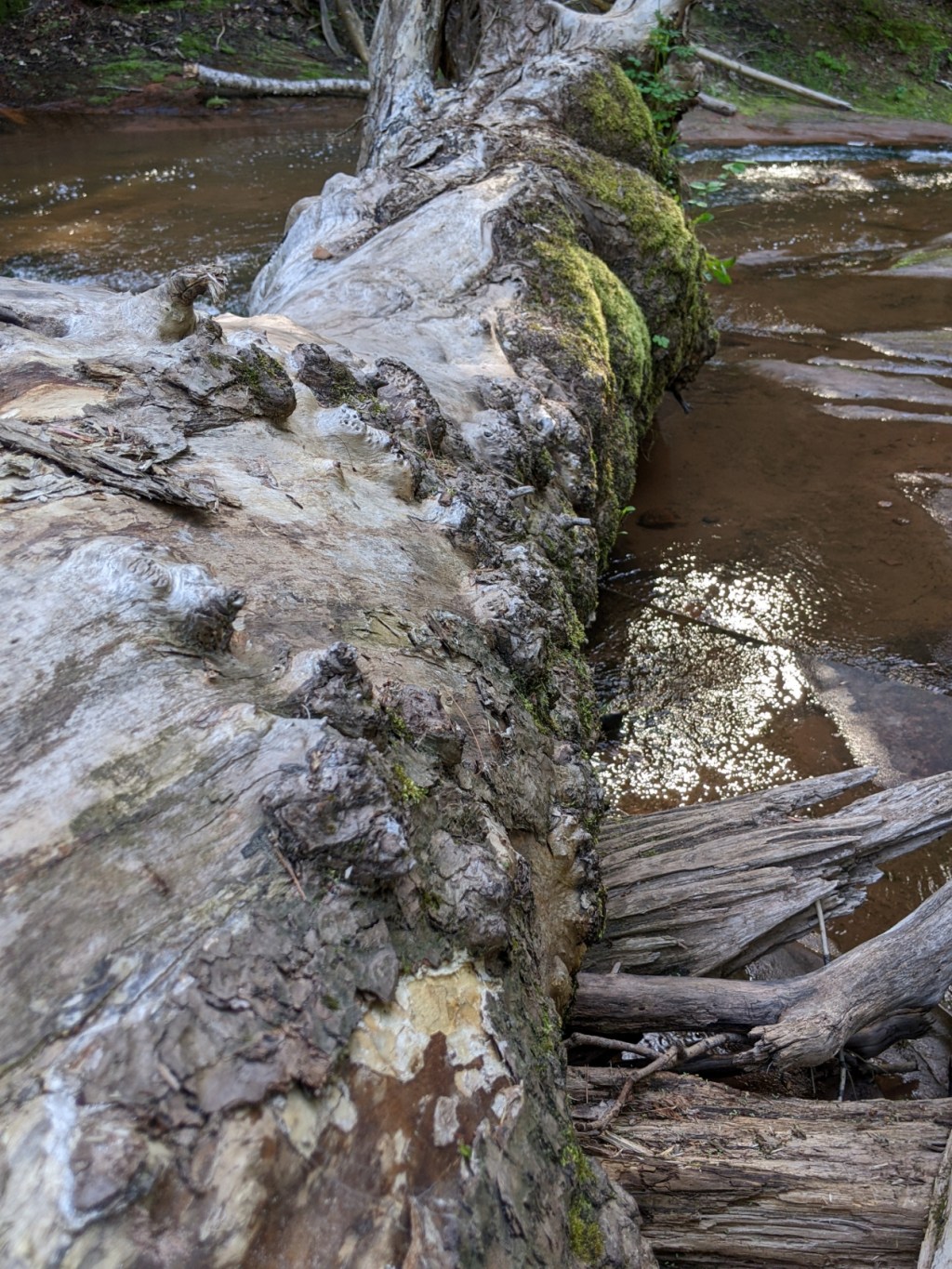
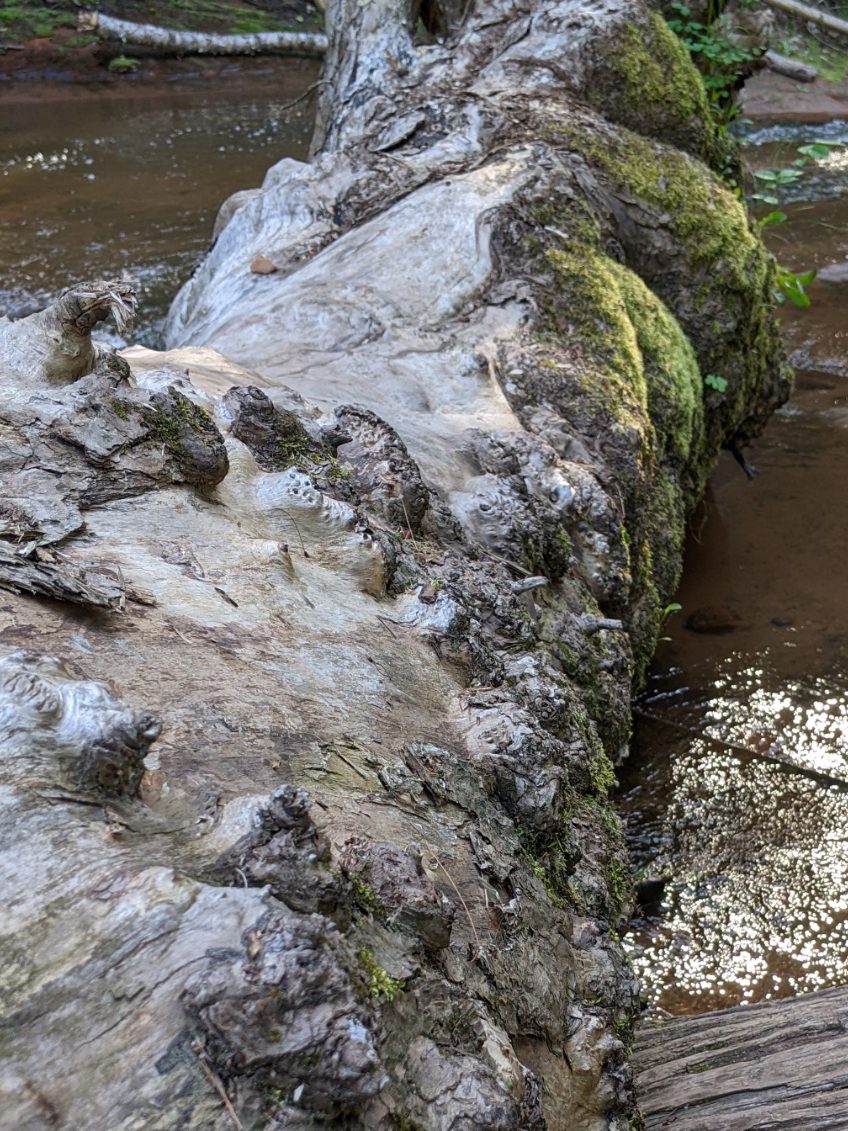
    The habits of a naturalist are eternally ordinary. Watch, count, find wonder, and repeat endlessly (there is always an end, but let’s ignore that part for today). In walking with a friend at Siskiwit Falls today, in the tiny village of Cornucopia along Gitchi Gummi’s southern shore, I counted the steps one of the waterfalls had carved into the sandstone in one particular spot, 13, and compared it to another spot. All this counting before wandering down to a sandbar where a bare tree lies, a mystery to be identified and cataloged. And by cataloging we may know a little more or satisfy our inner curiosity, through which we naturalists build an honorable relationship with Place.

                My friend and I debate the patterns of bark and growth, and find meaning in the speckling of knots along the debarked tree. We guess everything from alder to box elder to cottonwood. Through all this we find meaning from each other, deepening human bonds over curiosity in the slightest mystery. The habits of a naturalist are all about noticing relationships and tying niches together into a whole picture of a biome, large or small, and that includes human connections as well. My friend and I are just getting to know each other, and this mystery is our connection point. It is soon forgotten when they find an orchid along the river’s banks, a green bog orchid, which I still check in on every so often.

    Along the same banks, we later observe layers of sandstone, separated from the main body of bedrock. Here on the South Shore our bedrock is glacial till and sandstone on top of igneous gneiss. Here in particular, the river has eaten a path in the sandstone, and along these banks’ underneath cedar roots and their threads of roots, disks of sandstone have fallen from the main body of bedrock, to be cradled aloft by the roots of the cedar. I feel that way sometimes. Separated from the beloved source, and held up by the barest of gossamer strings. Somedays, I feel as the debarked tree must, or as the sandstone steps of the waterfalls. Feeling deep relationship, kinship even, is also a habit of a good naturalist.

    Still wondering who this tree was? Anyone know?

    Here is a lovely resource for understanding Wisconsin’s bedrock regions. ——> https://www.wpr.org/take-your-own-tour-through-geological-wonders-wisconsin