Tag: science

  • Thank God I am Not a Space Whale

    Thank God I am Not a Space Whale

    “Thank God I’m not a space whale,” I think to myself with my ear crushed against the yoga studio floor, “for if I were a space whale, I would be doomed to forever wander in wonder in the vastness, the grand vacuum. And I wouldn’t be able to experience this…”. The class below is playing one of my favorite songs, and its reverberations pulse through the floor in a steady rhythm, in opposition to the pristine calm of the Yin class above. My body, folded in tension and discomfort, exists in contrast with my mind, stretched out in perfect stillness. In the contrast I am in revery. My lover is on the next mat over from mine. Our hands nearly touch on the rough wooden floor. I am not a space whale. I am here. I am human. I am experience and thought held together by blood and flesh.

     As my body folds over itself so too does my mind, finding the parallax between the energy below and the calm within. Every muscle and thought folding into each other, held together by experience and sensation. Thus, I think to myself in gratitude, thanking whatever higher power there may be, whether God, Karma, or lover, that I am me, existing in this moment on the yoga studio floor, folded into my imagination.

    Space is vast. Potentially infinite, though more likely simply big. We can observe a 93 billion light year bubble, growing every day on some upon unknown substrate, teeming with vibrating strings of energy. Their pulse is probability and fills reality with more versions of itself than can possibly be known. Yet on the scale of sensation, of that which we may perceive and experience, space is deeply empty. Something around 96 percent of the universe is made up of stuff that cannot be seen, felt, or heard. I think of dark energy and dark matter as Karma without experience. Energy without spark. Lack of suffering. Lack of anything. Perfection. The rest of the universe isn’t so diverse either. Seven types of stars and seventeen types of planets, composed of and separated by one hundred some types of matter, scattered.in small bubbles hung together by gravity, the vastness of perfection in between. All incredibly breathtaking, all incredibly boring. So little variety in the inky darkness of dust and neutrinos.

    Thank God I am not a space whale, I think as I am folded over on the yoga studio floor. If I were I would be cursed to wander forever the void of the universe. Imagine that. Floating between the stars as though they were a sea, following the gravitational flow of galaxies from system to system, taking in everything. Every gas giant, every chunk of rock burning or freezing or just right and bursting with blue. Forever dreaming of observing the death of a star. Would the pale blue dot of the Earth be but a mote of dust in my wanderings, of the same amount of interest as a roadside attraction? Or would it be repulsive to my biology, an object of fear and dread, so adapted to the inky black as I would be?

    On the yoga studio floor, I am for a moment that space whale, staring down at a chaotic planet of joy and pain. My keen eyes see the Whittier neighborhood, photons reflected off speeding cars, record stores, and folks walking between destinations. There is no medium for sound or smell in my home amongst the vacuum, so I can only observe the people in child’s pose through the yoga studio glass. Just for a moment I am that wanderer, bound to bearing witness to the birth and death of stars and planets. Always witness to experience, but never the one who experiences. A creature of wonder in our imaginations, sentenced forever to wander the void of eternity.

    Here I am. My ear pressed against the wood floor, the sun weeping photons into my eyes. I am a being of Earth, experiencing life regardless of will. Doomed to experience with little time to observe. I am brought back to myself. The song changes. The vibrations through to floor slow, and my teacher calls me to a new posture. My body rises without the intervention of my mind, instinct pushing me forward. I experience every speck of light falling upon my body reflecting know the colors I portray myself to be. I am called back to experiencing my present moment, instead of merely observing it. feeling the contraction of each muscle on my way to gratitude. Thank God I am not a space whale, I think to myself. Later that night I am crying in my bed, remembering I am cursed and blessed to experience, and to someday end. My lover holds me. In my dreams, I wander from star to aching star.
  • An Equal and Opposite Reaction

    An Equal and Opposite Reaction

    Today as we cleaned the trash of generations past, a friend and I discussed how we as a society will move to a more honorable, sustainable lifeway. We spent hours cleaning an eye sore of a shed, which had been left behind by the previous “owners” of land, clearing away old windows, wood carved in raccoon scat, and many tools rusted into uselessness. Around us birds sang, the wind blew, and the promise of throwing our bodies into Gitchi Gumee at the end of the day kept us going. We talked all about the future, about heat pumps and masonry stoves and floor joints. And we talked about systems.

    I fully recognize my place in the world. How gifted I’ve been, and how dependent upon the fossil fuel economy I have been. All the debris cleared out of that old old shed will go into a dumpster, and to the place we call “away”, a place which doesn’t exist. My ability to create and to learn and to grow is a symptom as well of a system which cannot exist much longer. And yet we as a society do much to prop that system up. We create pipelines and open pit mines and some of us protest against such things. After all, “a body in motion will stay in motion until acted upon by an outside force”. This is Newton’s first law of physics, and applies to human systems too. The fossil fuel economy will remain in motion until there is an outside force to stop it. Many millions of us have become that outside force, acting upon systems to stop them. Today, as I clear away the trash of one system, I wonder if we’ve forgotten some other laws.

    Every action has an equal and opposite reaction. Every protest faces equal and opposite support for projects which exploit environments and people. But what we have not seen is an equal and opposite reaction to the project itself. What would an equal and opposite reaction to an operational pipeline be? What about an open pit mine? I don’t have the answer today, but on first thought I see gardens built, grasslands replanted, housing created. For every pipeline, an equal and opposite reaction to rid ourselves of the very reasons we need them.

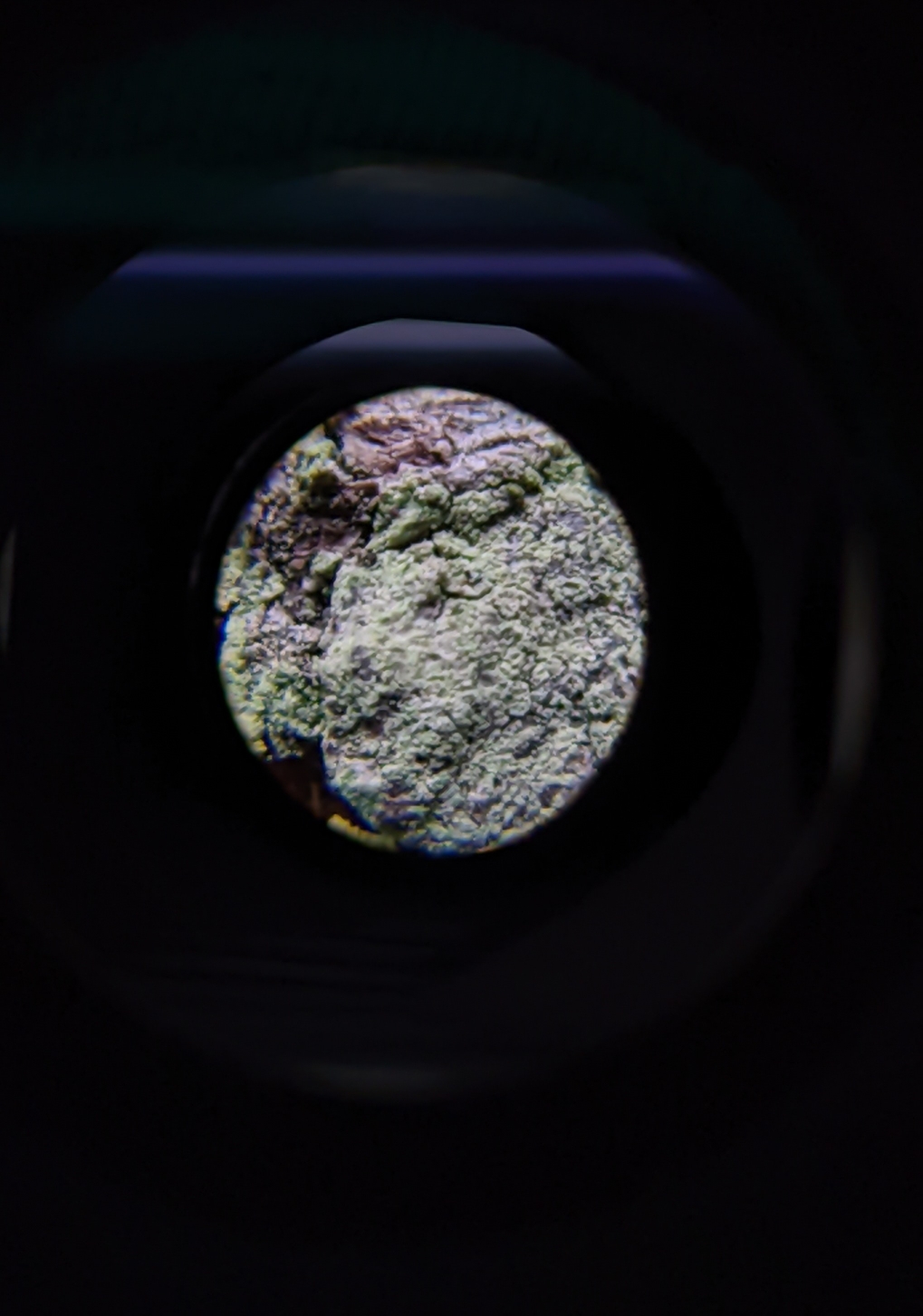
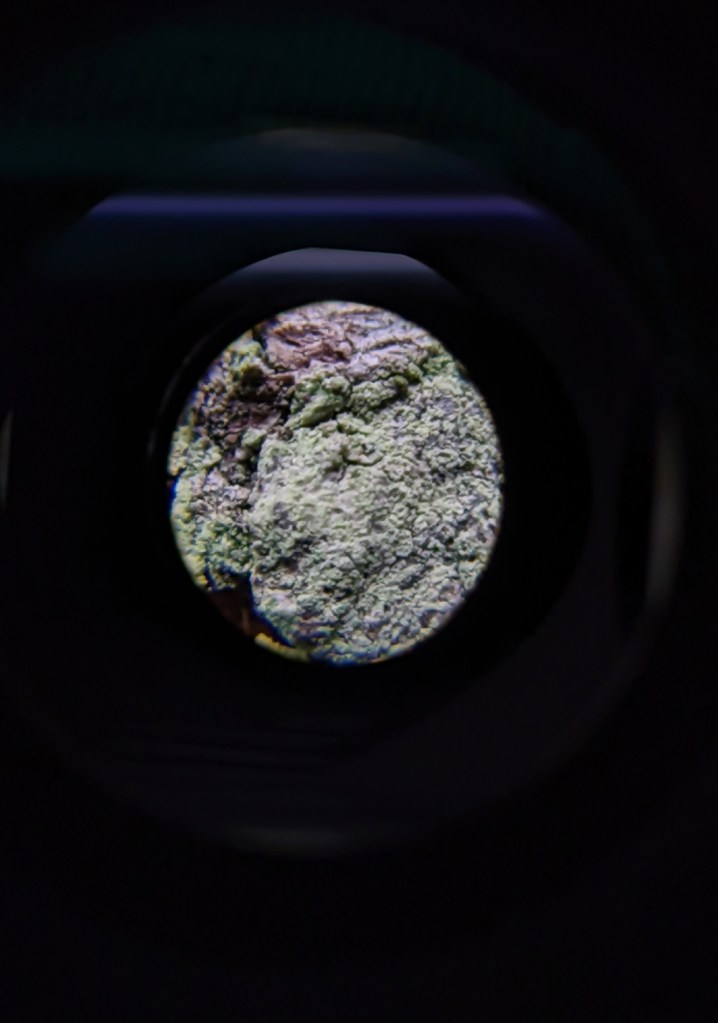
    Lichen through a microscope, an equal and opposite rection of light and mirrors?

  • Knowing by Not Knowing

    Knowing by Not Knowing

    A dear friend recently told me “I love knowing things by the way I don’t know them” as we spoke about differentiating species of lilies. I loved that phrase deeply, and I’m still trying to find all of its meaning. To know something by the ways in which you do not know it is an action. You are actively seeking what you you do not know about a thing, without seeking to answer those unknowns. I am simply wondering “what will the color of this lily be?” or “what are the parts of their flower and how do they react to the midsummer sun?”, and then I am letting the lily tell me in their own time. This attitude has some similarity to the scientific method I think.

    The curiosity of a naturalist  is bounded not by the discovery of a thing, but by the rediscovery of that thing over and over, as our perspective of the thing is changed by time. Year after year, my observation of the lilies in my yard is changed and given depth by my own sorrows and wonders, as well as the minute details of jetstream chaos, temperature differences, and forest canopy coverage. This could be considered a variation of phenology, keeping track of the year-to-year changes in nature’s timing as we track our own changes as well. To me, phenology is the realization that our own perception of nature’s changes affects those very same changes.

    The best emotional state with which to make phenological observations is with a cool and rational mind, looking for the first bloom of the marsh marigold the instant its petals unfold! But that same rational mind tells you little about your relationship to that marsh marigold, or everything that is happening around it. You sure could wait beside the wetland boardwalk all night, waiting for the petals to open before the morning light. Or you can find yourself on an adventure, and suddenly remember “ah yes, I’m looking for Marsh Marigold today, who were they again?”. By allowing ourselves to be curious about the mysteries around us, we may lose some scientific pinpoint accuracy, but we may discover so many more connections between all these little things we may have never seen before.

    Knowing a thing by the ways we do not know it means simply asking questions, not expecting an answer, and loving that thing through the mystery of what we ask. To love something or an interaction of things for its mysteries is a practice of honorable interaction with the ecological system of our Home. I know Gitchi Gummi by the way I never know what she will give me on any given day. By the way I don’t know what is around the next bend along her rocky and winding shores. Just as I purposefully forget the color of the lilies in my yard, year after year. I do this so I may hold that surprise each time it blooms, and may love again those petals, as their ornage petal unfurl to the mid-summer sun or those Superior waves as they crash about a mysterious pointe. I invite you to find yourself in boundless surprise, by allowing yourself to never know too much, and to always forget one little thing.